• Crosshairs: Trail to Road

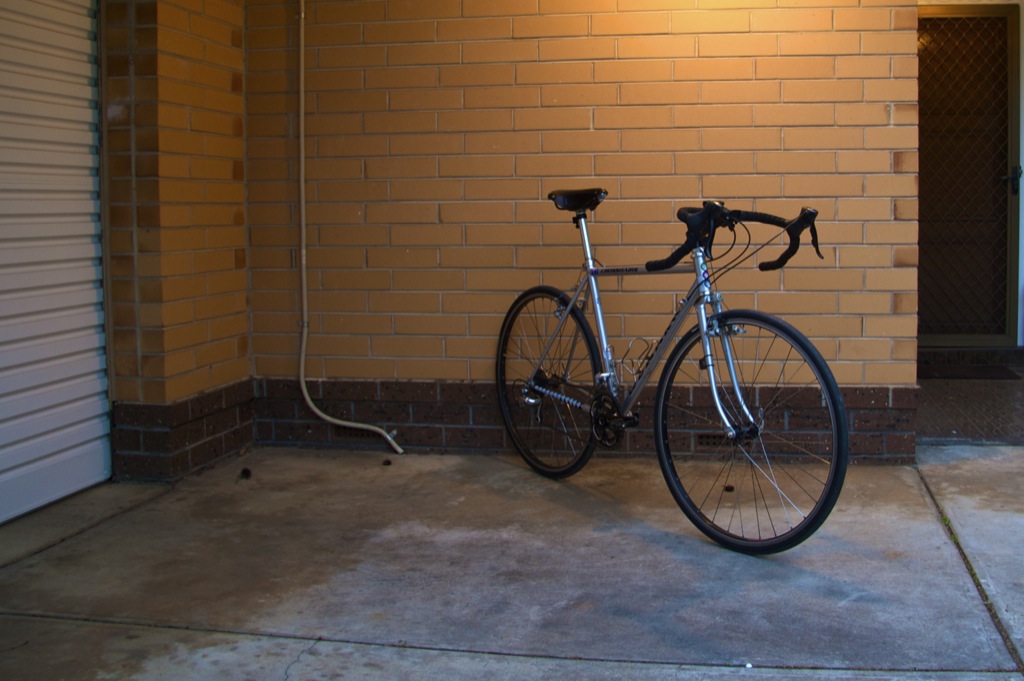
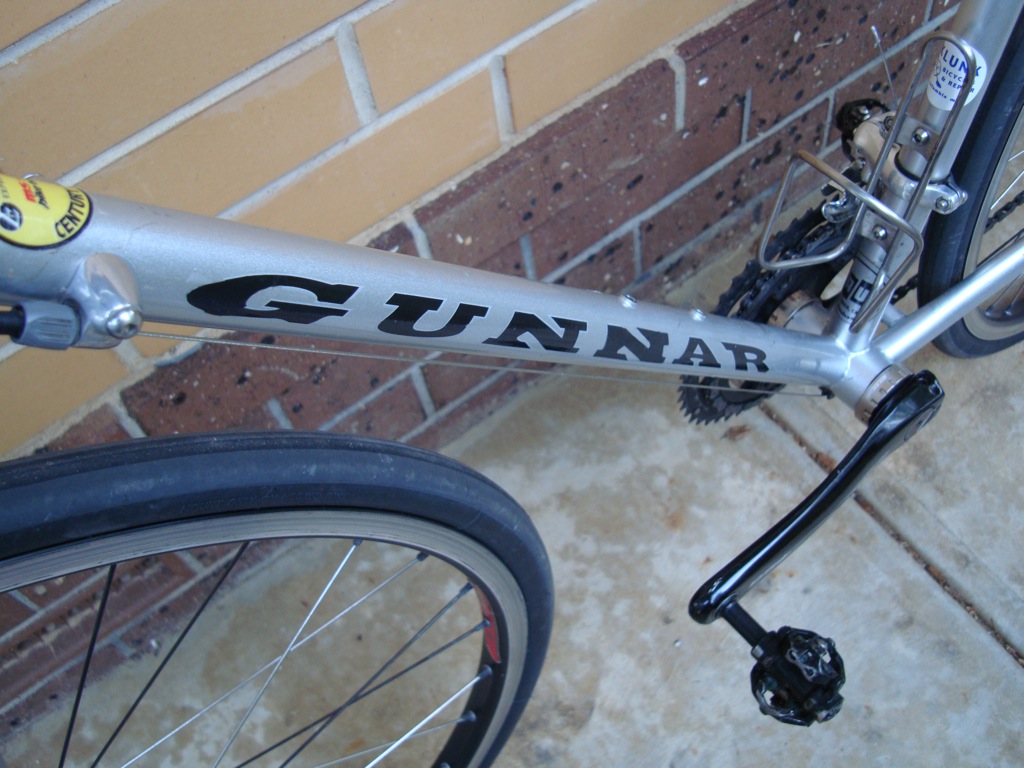
    Gunnar Crosshairs

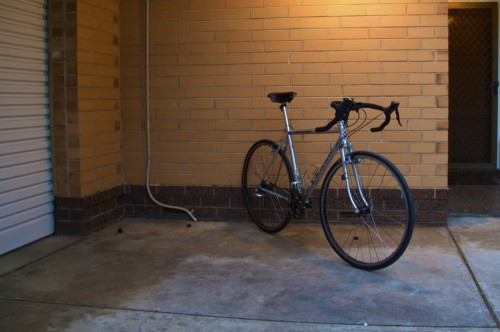
    Since moving to South Australia, the Gunnar has been used exclusively on the road.  However, the Gunnar has always been set up primarily for trail use.  The small frame and low handlebars are great on the trail, but can be quite tiring and painful on longer road rides, especially on the descents.

    Prior to Amy’s Ride I made some changes to better suit the Gunnar to road use.  Having read many, many opinions on road frame sizing and having gone over the geometry and dimensions of my 52cm Gunnar numerous times, I was almost ready to replace the frame.  However, after looking at more appropriately-sized frames, it was clear that a slightly longer and taller stem with my existing frame might be an option.

    The new stem is a 120mm 17° Cinelli Via with a 26mm clamp.  It is forged aluminum, cheap, functional and the right size.  It isn’t as nice looking as the Salsa Cromoto, but unlike the Salsa, it was available and not part of a recall.  The new stem moved the bars slightly forward and significantly higher, achieving an effect similar to a larger frame with a taller head tube.  The only drawback taking this route is slightly goofy look that results from the combination of a 25mm spacer and a 17° stem.
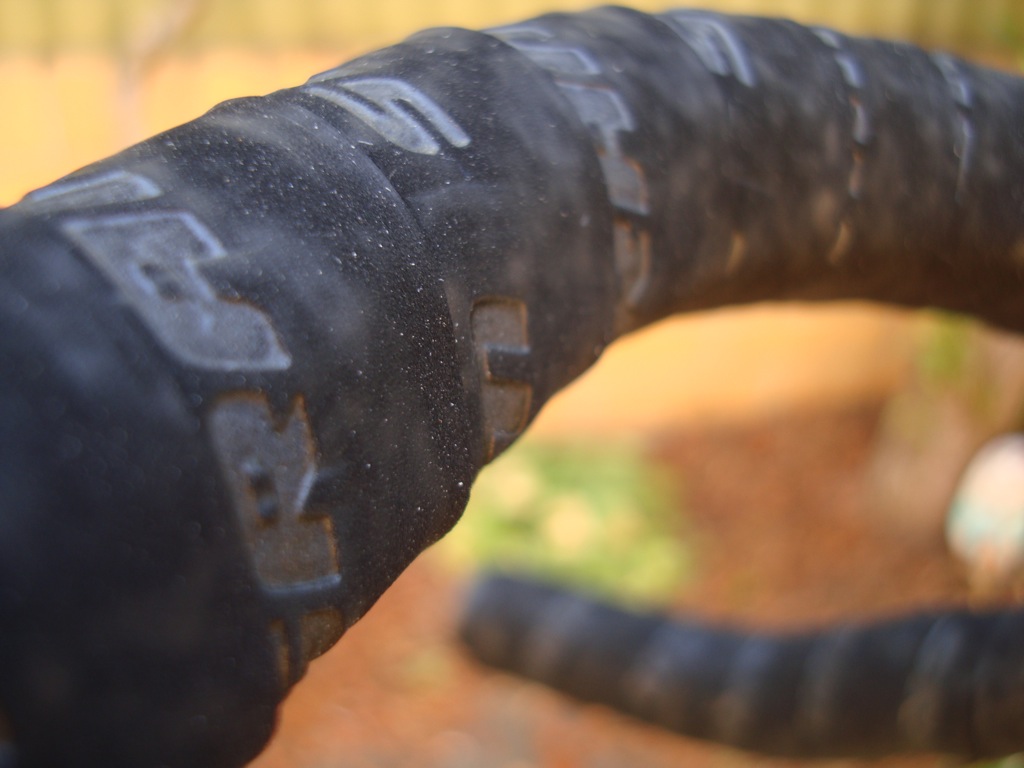
    SRAM Superlight

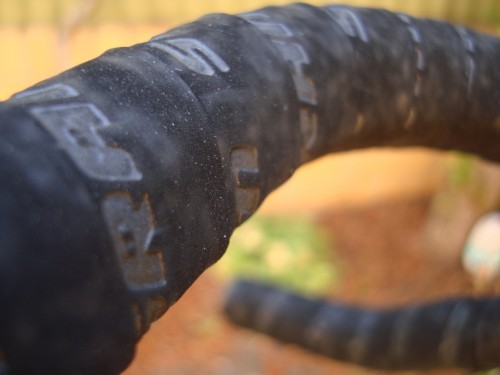
    Along with the new stem came new bar tape as the brake cables were too short to accommodate the new stem, and the old tape was too worn to reuse.  I would have preferred to replace the old Salsa Goma tape with the same, but, like the Cromoto stem, it was no longer available.  The thinnest most Goma-like tape I found was SRAM Superlight.  The SRAM tape seems slightly thicker than the Salsa tape, but it is less dense.  The texture is not as nice as the Salsa tape either, but it is better than cork.  Wrapping the bars is a little tricky as the Superlight tape does not stretch, but the kinks worked themselves out after one ride.
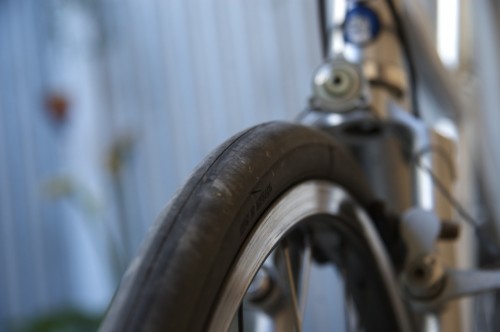
    Vittoria Rubino Pro Slick 25mm on Salsa Delgado Cross

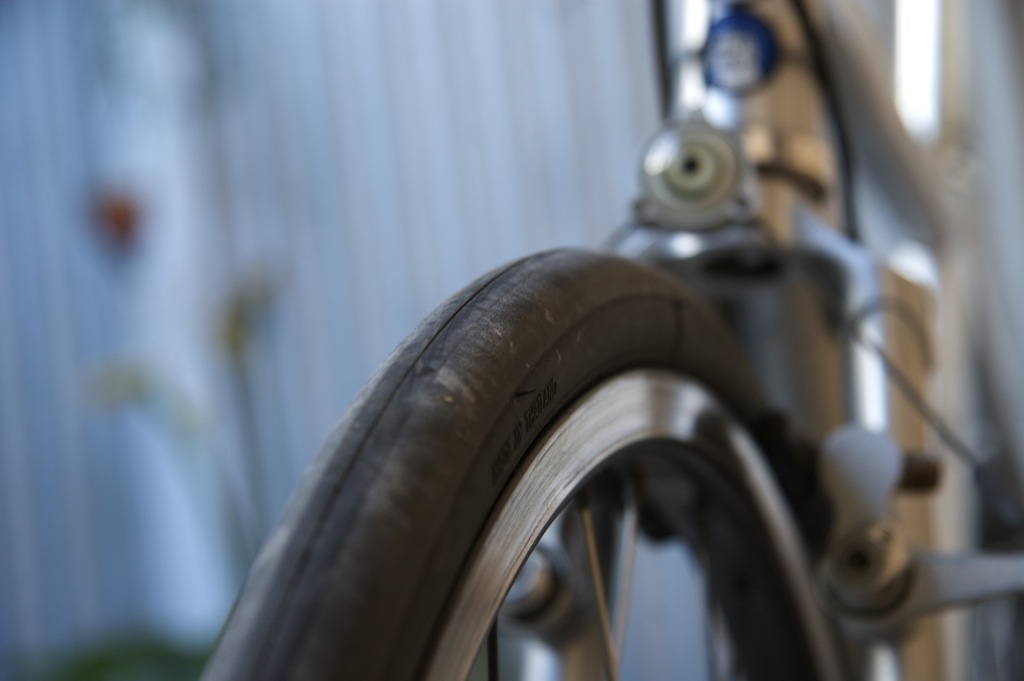
    Finally, I have new tires.  The 28mm Hutchinson Top Speed tires were worn, but in decent shape except for some rips and cuts from road debris.  They were replaced with a pair of Vittoria Rubino Pro Slick 25mm tires.  I was a little apprehensive about going to a narrower, lower volume tire, but so far I’ve been happy with them.  The 25mm wide Vittorias fit on the 22.5mm wide Salsa Delgado Cross rims without a problem, and have a nice cross section when mounted.

    The combination of stem and bar tape worked well on the 100km Amy’s Ride.  The taller bars were easier on my neck, descending was much less painful, and I actually looked forward to the next downhill.  The SRAM bar tape was okay, but I preferred the Goma tape.  While I do like the thin, “non-bulky” feel of the Superlight tape, I would prefer something with a similar thickness, but a little more solid/dense.  On the other hand, the new tires worked very well.  They were comfortable, cornered well, and were surprisingly quiet.  The combination of these tires and an almost silent XT rear hub is a nice combination, though it is easy to startle slower riders when overtaking.

  • Amy’s Ride 2009

    Amy's Ride 2009, Southern Expressway

    Photo Credit: Adelaide Now

    Yesterday I rode in the BikeSA 2009 South Australia Amy’s Ride tour from Adelaide to McLaren Vale.  From the Amy Gillette Foundation:

    Amy’s Ride provides the Amy Gillett Foundation with an opportunity to proliferate key messages of safe and responsible road use, increase awareness to the need for more shared respect, raise much needed funds and honor the memory of Amy.

    The above photo is from the Adelaide Now story and photo gallery covering the ride.  As mentioned in the article, the weather was hot and sunny, and over 3,000 riders took part in the event.

    Amy's Ride 100km Route

    I rode the 100km route that began at Flinders University, went down the Southern Expressway, then along the coast to Willunga, then up into the hills and finally back down to McLaren Vale.  The Southern Expressway, Willunga Hill and some other sections of the route were closed to car traffic.

    Amy's Ride 100km Elevation

    The Expressway starts out with a steady 4km climb and ends with a fast downhill.  The next notable hill is 3km long Willunga Hill.  This one starts on the east side of Willunga and climbs at and average gradient of 7.5% for a total of 227m of elevation gain.  After Willunga Hill, the ride is mostly downhill with some very fast descents.

    Not including my 10-15km commute to the start of the ride, my total time for the remaining 100km was 4:15 with approximately 40 minutes at rest stops/lunch.  I can’t give my usual data because even though my cyclo-computer  was working the night before the ride, it was not on the morning of the ride.  Oh well.  However, based on these estimates, my average speed was similar to that of my last tour, the 2006 MS 150.  Overall, this was a lot of fun, and contrary to what you may think, climbing Willunga Hill was definitely the highlight of the ride.


  • What to do with a Pentium III?

    ,

    PIII

    A few months ago I found another PC in the garbage.  Much like Trash Server, this one was (mostly) functional.  But unlike trash server, I didn’t really have a use for it.   This beige mini tower sports a 733MHz Pentium III CPU, a couple smallish hard drives, and a dead CD drive.  After sitting in the corner for a few months, the new trash PC has a use.

    Charger

    What are we looking at?  This is a 733MHz battery charger.  While it may not be the most efficient, it was certainly the least expensive (free) option.  Why did I do it?  I have an older dual-beam bike headlamp that has a 110V/60Hz-only charger (Australian AC power is 220V/50Hz).  To charge the headlamp batteries I could either buy a new charger or buy a step-down transformer to use the current charger.  Either option would have cost more than the headlamp.

    After poking around the garage, I found my automotive 12V to 110V power inverter.  This would work fine as-is, but the headlamp battery charges overnight, and I don’t have many all-night road trips planned.  Obviously I needed a 12V power source other than a Subaru, and this is where the PC comes in.  The PIII, with it’s ATX power supply, makes a great 12V power source and a convenient flat surface on which to charge the battery.