
What, and Why?
I have more to say about dropbar MTBs, but I’m going to keep this one brief.
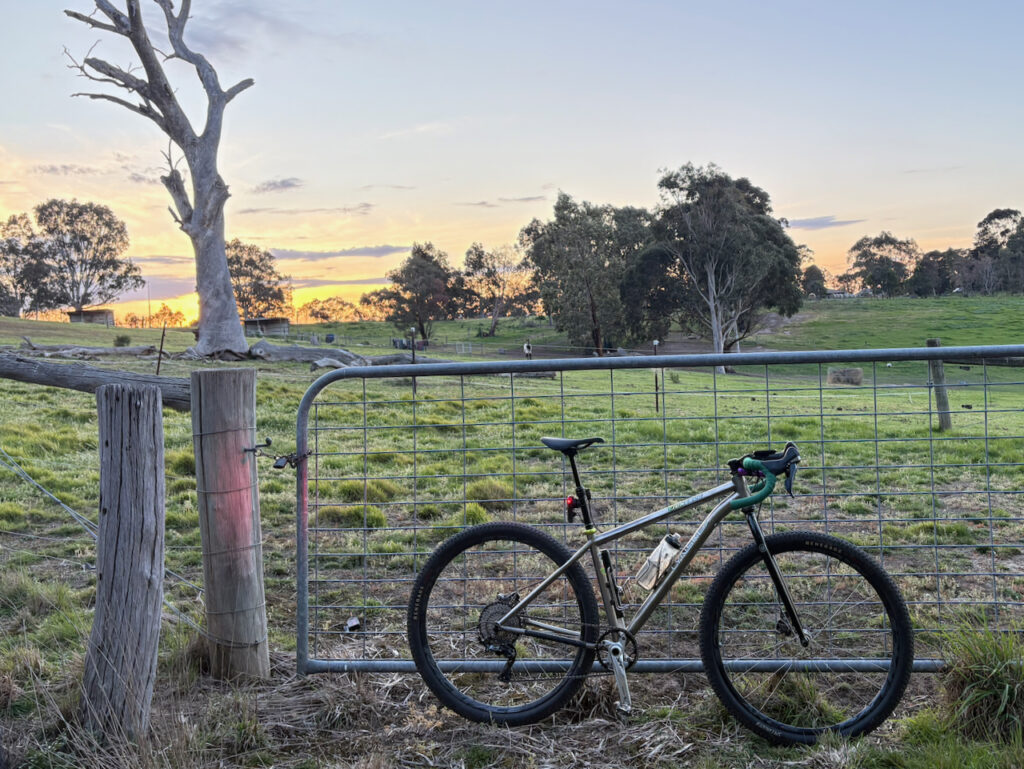
In the last post I wrote (at length) about my Kent Eriksen 650b dropbar MTB, and this time I’m going to tell you about my other (also titanium) dropbar MTB, Junebug, a 29er dropbar MTB built on a 2011 Lynskey Ridgeline 29er hardtail frame. I’m not going to go into Junebug’s full history (or provide an animated GIF baby album) but I will tell you about the important parts.
The important parts
Junebug originally belonged to my brother, Eric. Eric had appendiceal cancer and he wrote about his experience including all of the bikes (and trikes) he rode throughout this period on dropcancer.org. Eric passed away earlier this year, but he kept riding (trikes) up until the last weeks. If you read about this experience and his thoughts (I suggest this one) you’ll see that he had a similar appreciation for bicycles; all of them, not just dropbar MTBs.
Eric purchased this frame new from Lynskey in 2011, rode it as a hardtail MTB, and took it on a roughly similar path as my Kent Eriksen to eventually becoming a dropbar MTB. Here I’m going to discuss some of the different choices Eric made for Junebug, some changes I have made, and finally how all of this has affected the final build and how it differs from the Eriksen.
The frame and fork
The Lynskey Ridgeline is pretty firmly in the early 29er hardtail category with a relatively steep headtube, short reach, and geometry that was probably more of a response to 26″ hardtails than anything else. Despite the conservative (dated) geometry, the chainstays are mercifully short and the result is reasonably balanced: not too twitchy and it definitely does not feel sluggish. This Ridgeline is also built around a 100mm fork, which resulted in an annoyingly tall stack for a hardtail, but when combined with the short reach it makes a pretty nice platform to attach a dropbar. I believe the combination of these traits make the Ridgeline an excellent option for a dropbar conversion and, depending on component choices, could result in a more capable and versatile dropbar MTB than the Eriksen.
Wheel size
The Lynskey was and still is a 29er. Aside from the widely discussed benefits of a larger rolling diameter, what is the single largest benefit of a 29er over 650b? Tyres. There are significantly more tyre options in 700c/29″ than 650b/27/5″. There are more tread options, more casing options, more widths, and more everything. There are especially more high-end 29″ XC tyres, which are what I want on my dropbar MTBs.
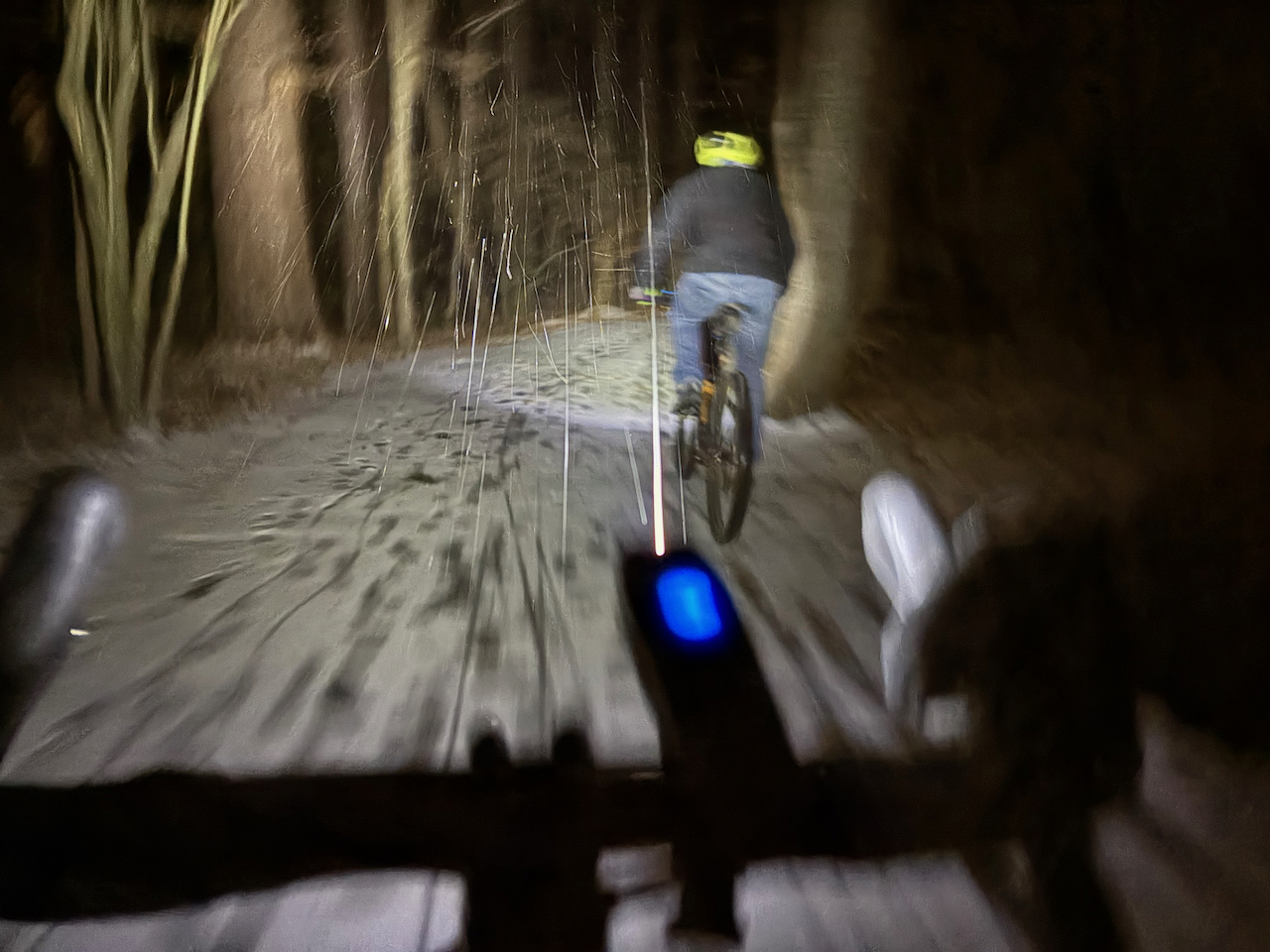
Junebug currently has a pair of Specialized Renegade S-Works 29×2.1″ tyres, which weren’t ideal in the snow (see above), but have been quite capable and quick everywhere else I’ve ridden them. I don’t really know what to expect for durability and longevity, but I imagine I’ll find out.
Drivetrain and brakes
Eric used Ultegra RS685 11-speed levers and BR-RS785 post-mount calipers for the initial conversion, and I’ve left them in place. The levers look and feel like Ultegra, and the calipers seem to fall in a similar position in the Shimano lineup. Like most things Shimano these work well and are pretty reliable. No boutique parts needed here, just Shimano 11-speed road parts all working together as intended. The left-side lever does still have its unused 2x shifter in place, but it’s not causing any trouble. I could have used it as a dropper lever but I’d rather not permanently disable the shifter in the process. More on droppers later.
Eric rode in a less hilly part of the world and subsequently had a smaller 11-36t cassette and a quite interesting Ultegra RX clutched rear derailleur. The Ultegra RX is the proto-GRX 1x rear derailleur that is quite similar to GRX 11-speed, aside from its 34t max cog capacity. I made the pretty simple swap to a GRX 812 11-speed rear derailleur and an 11-42t cassette, which allowed me to keep the RS685 levers and brake, but gain a lot of low-end gearing for the local Melbourne terrain (the Ultegra RX derailleur has found it’s way on to the 2×11 Lynskey R300 road-ish bike).
The result of the conventional Shimano 11-speed drivetrain is that the bike feels a lot more like a road bike than the Eriksen, something which is further reinforced with the handlebar selection.
Handlebars and stems
Eric had a Ritchey WCS Butano 42cm (73mm reach / 118mm drop / 12° flare) on the bike, which worked reasonably well, but I do not like traditional dropbars with little-to-no flare offroad. I find the curved ends of the bar tops often hit my wrists and forearms when riding in the drops on wide(ish) dropbars offroad, and these Ritchey bars fell into that category. Fortunately for me, I still had those Salsa Cowchipper 44cm (68mm reach / 116mm drop / 24° flare) from the Eriksen. Aside from the flare, the drop and reach are reasonably close to the Butano. Overall, the Salsa’s feel a lot more road-like than the Ritchey Beacon bars on the Eriksen, and seem to be a reasonable compromise for something that will see more gravel and path use. (Very brief aside: I have a narrower 40cm Ritchey WCS Butano Internal on the more road-oriented Lynskey R300, and it’s fantastic.)
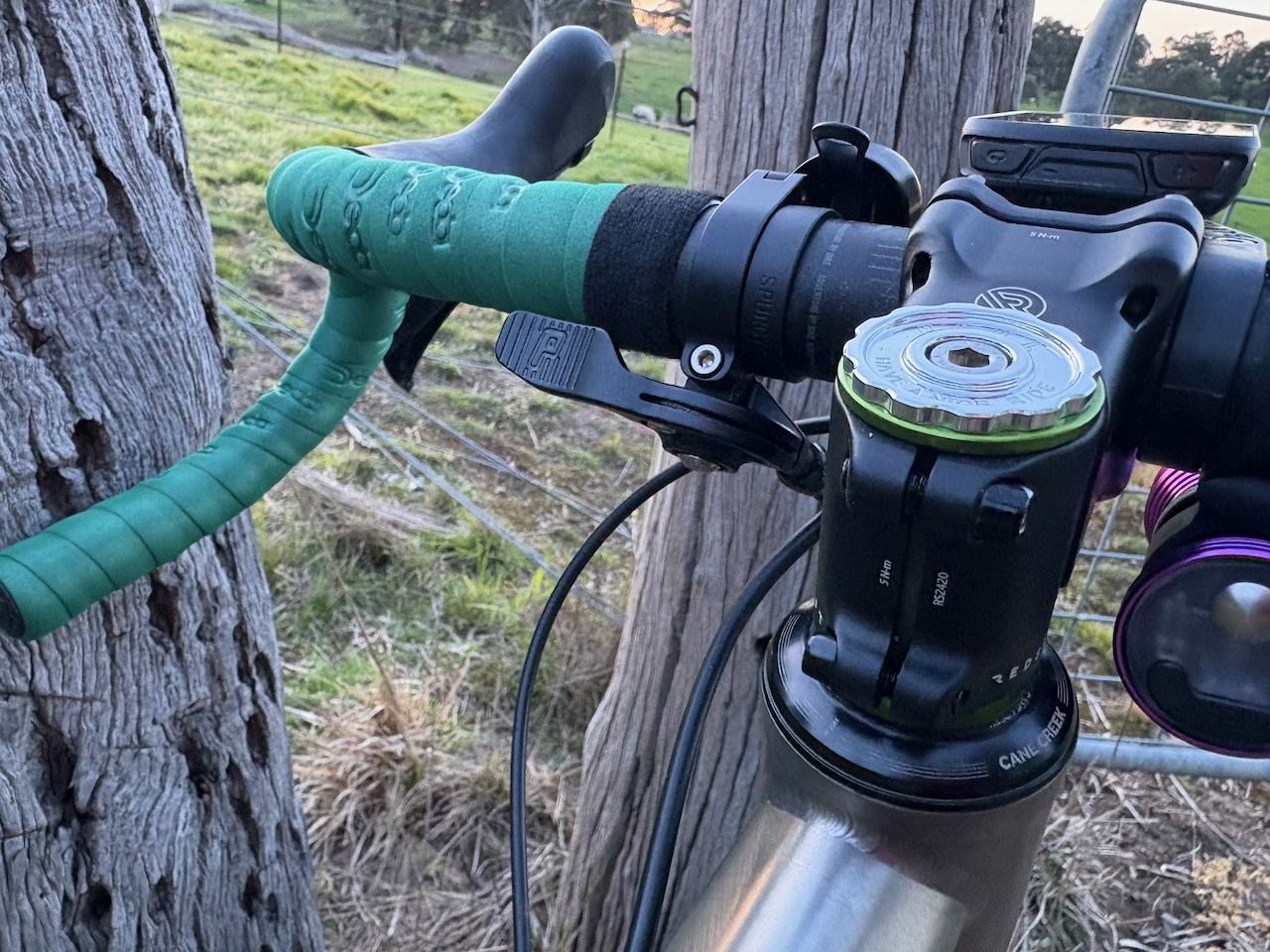
The Redshift 55mm / 6° rise suspension stem is a bit of a curiosity, but I think it works. I’m not sure I’d miss it if I swapped for a traditional/rigid stem, but I appreciate the compliance and comfort. The slight rotation of the bars was a little disconcerting initially, but you quickly get used to it and it’s not an issue.
Seatposts
One potential issue with using a MTB frame as a dropbar bike are the drastically sloping top tubes that can result in excessive seatpost length. This isn’t generally an issue, and can be an advantage in some situations, as long as those situations include a 30.9 or 31.6mm seatpost. On Junebug my saddle height resulted in a 295mm collar-to-saddle-rail extension. This wasn’t an issue with the 400mm Lynskey titanium post, but is still longer than the spec on the longest 27.2mm external-cable dropper I could find. I really wanted to use a PNW Coast gravel 100mm suspension dropper (yes, gravel suspension dropper seat posts exist, and I have one of these on my rigid 29er singlepspeed), but the excessive seatpost extension here ruled it out. The PNW Pine 110mm dropper post was the best match to my requirements and is a close enough, but even it is running a bit above its minimum recommended insertion with my current saddle and crank length selection.
I used a Paul’s Component Engineering 31.8 Dropper Trigger mounted near the stem along with my own design 3D-printed brake hose shift cable clips to run the cable back along the top tube to the post. I’ve had a lot of parts from Paul’s over the decades, they’ve all been pretty fantastic and this one is no exception. The cable routing on the Paul’s lever nicely accommodates the stem, the lever position is nice and it looks great. Downsides? While the lever still less expensive (only if you don’t opt for the polished version) than the dropper, it’s not by much. I would have opted for a nice, bright colour, but when I ordered this I still hadn’t decided which dropbar bike was going to get the dropper, so it’s black. As far as actual use goes, it works well if you’re on the bar tops, but I prefer to descend in the drops so it’s not always ideal. The work-around? Just plan ahead a little.
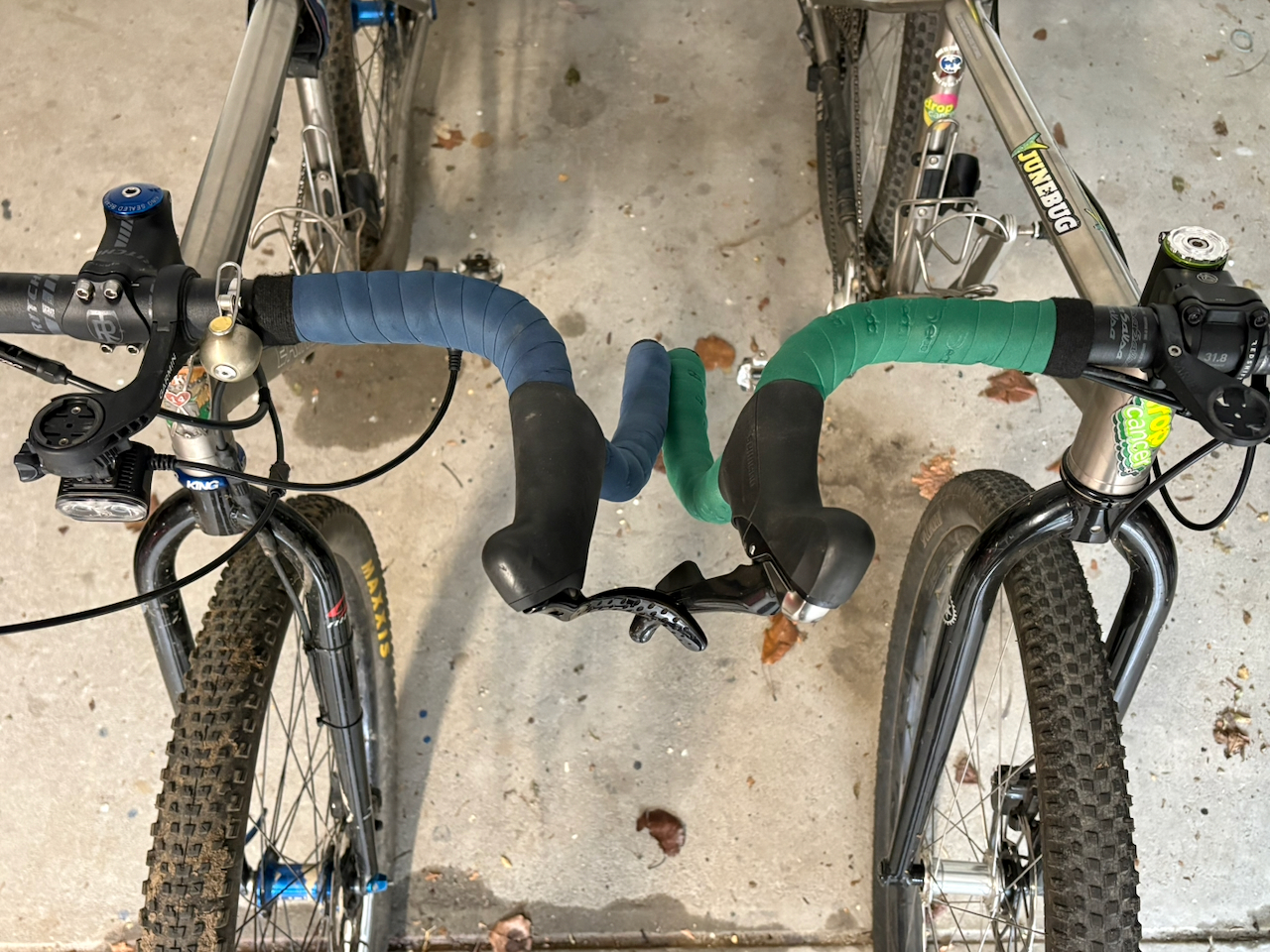
I prefer the widely flared bars, the feel of the TRP Hylex brakes, and the quirkiness of the Gevenalle shifters on the Eriksen.
How do these bikes compare?
There’s not a lot between the geometry of the two as they’re both based around early XC bikes, but the slightly taller front end on the Ridgeline is better suited to dropbars. Big wheels feel great on gravel and singletrack, and I don’t see any downside; I would choose 29″ wheels over 650b any day. The drivetrain and bar choice are more road/gravel-oriented on Junebug, but I think I prefer the widely flared bars, the feel of the TRP Hylex brakes, and the quirkiness of the Gevenalle shifters on the Eriksen.
Droppers are fantastic. The Erisken would absolutely benefit from a dropper, and a PNW Coast would be ideal. However, I’m far too happy with how the Kent Eriksen titanium Sweetpost looks and feels (mostly looks) to ever swap it out. I took Junebug down a short black DH and it was actually more fun than I anticipated. The track is apparently named Down you go and is basically a fall line on the cliff/hillside on the Plenty River north of Whatmough Park near Greensborough (no gaps, just steep, rutted, and loose). With a dropper post it felt more like under-biked XC riding technical downhills than anything else.
There’s clearly a lot of overlap between these two bikes, not necessarily much to distinguish them, and I’ll probably have a difficult time choosing which to ride. I may try slightly more aggressive tyres on the Eriksen someday, perhaps something better suited for winter riding.
Whatever the case, I hope some of these slightly different solutions to similar dropbar conversion problems on these two examples might be useful to anyone considering their own dropbar MTB conversion.
If 29″ is better than 650b/27.5″, then why not 32″?
What about a 32″ dropbar MTB?
If 29″ is better than 650b/27.5″, then why not 32″? That’s not a bad idea. It would be like the Eriksen or the Ridgeline, but with the toe overlap of the Gunnar and even more expensive tyres. But wait, what about 750D/30.5″? 🙄
Leave a Reply