crossgeared.com

Eagle 6 Hour Enduro MTB Race

13 April 2010
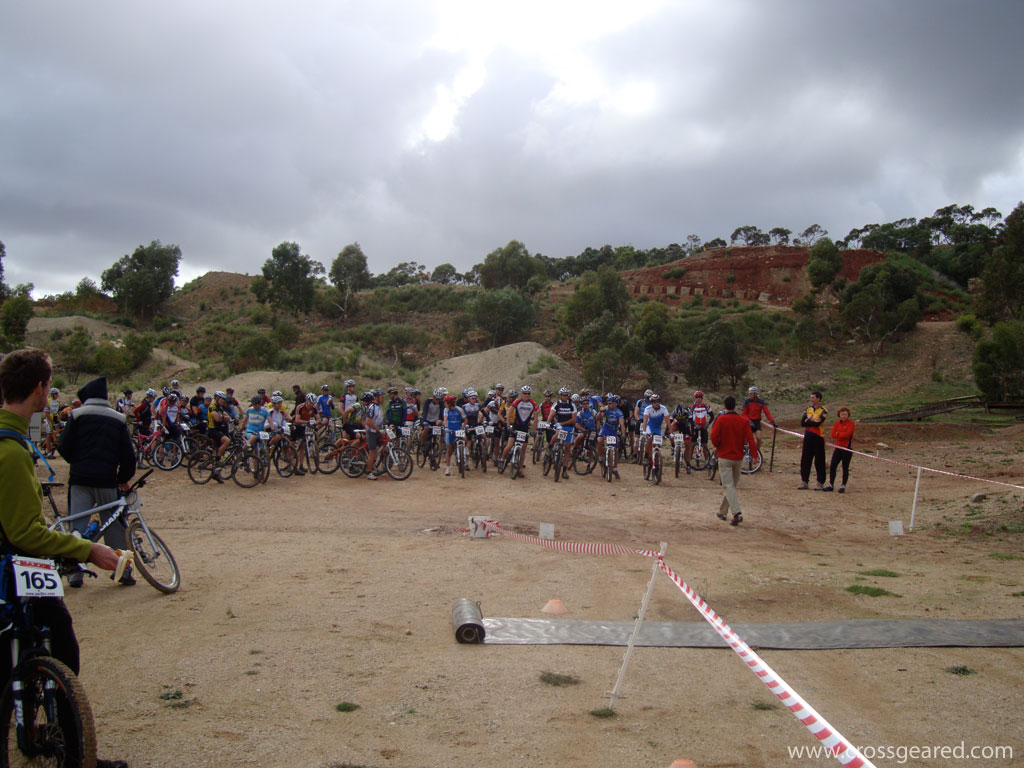
I raced in a team 6 Hour Enduro at Eagle Park near Adelaide, SA on Sunday. This was my first endurance race, and my first race over an hour (or so). There were about 90 racing with a mix of solo, under-17, veterans, teams and mixed teams.

We had three on our team, Dave, Dave and Tom.  I met Dave and Tom on the Tour Down Under Challenge earlier this year, and we’ve been riding semi-regularly since.  Anyway,  I rode three of the eight laps.  We rotated through each lap, so I did get a chance to recover in the time in between.

I rode the start lap. The day started off cool at around 15C and ended windy and still cool. The course was wet and muddy from overnight rain, but it was quickly dried throughout the day. There was a fair amount of traffic on this lap, but it thinned out by the first climb. I finished this lap without any crashes or incidents.

The course was mostly dry and in good shape for my second and third laps. I did manage to go over the bars three times during these two laps, but neither I or the bike sustained any serious damage. While I was trying to improve on the time of my first lap, both laps came in about a minute and a half slower.  I’m fairly certain the crashed weren’t helping my times.
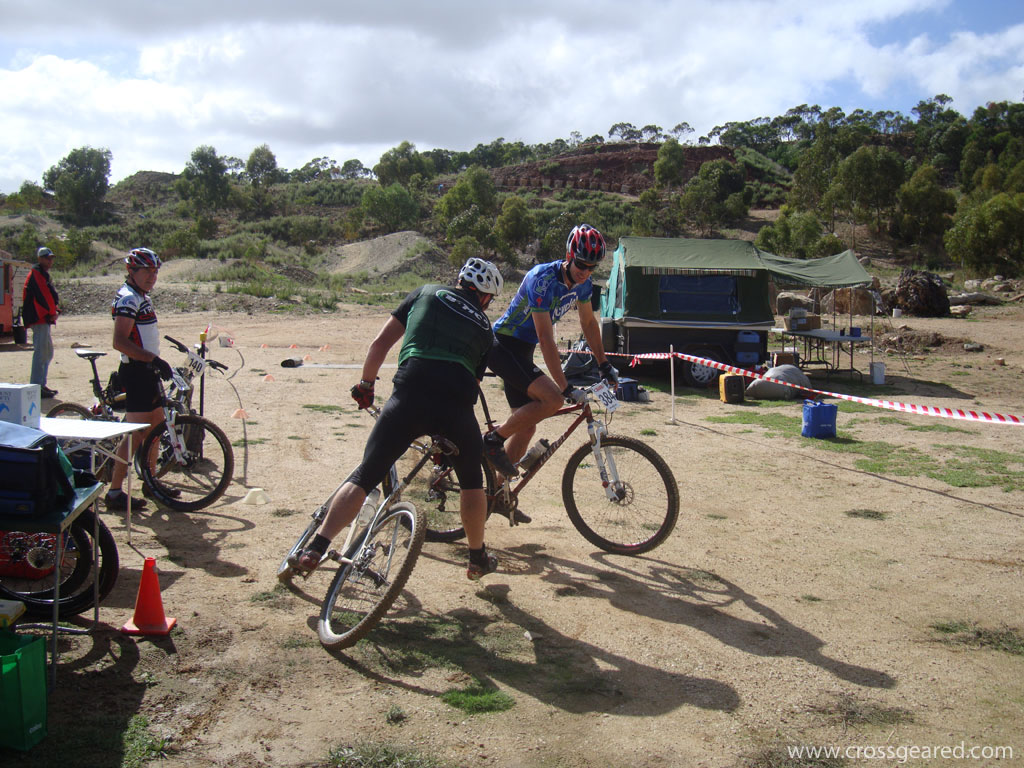
Above you are looking at one of our “well executed” team transitions.  Note that that both riders should optimally be facing the same direction.

In the end, my lap times were 49:11, 50:27 and 50:55. The average lap time for the teams were completed against was 48:37, with a fast lap of 39:34 and the slowest at 1:41:38. Overall, our team finished 4th of 10, completing eight laps.
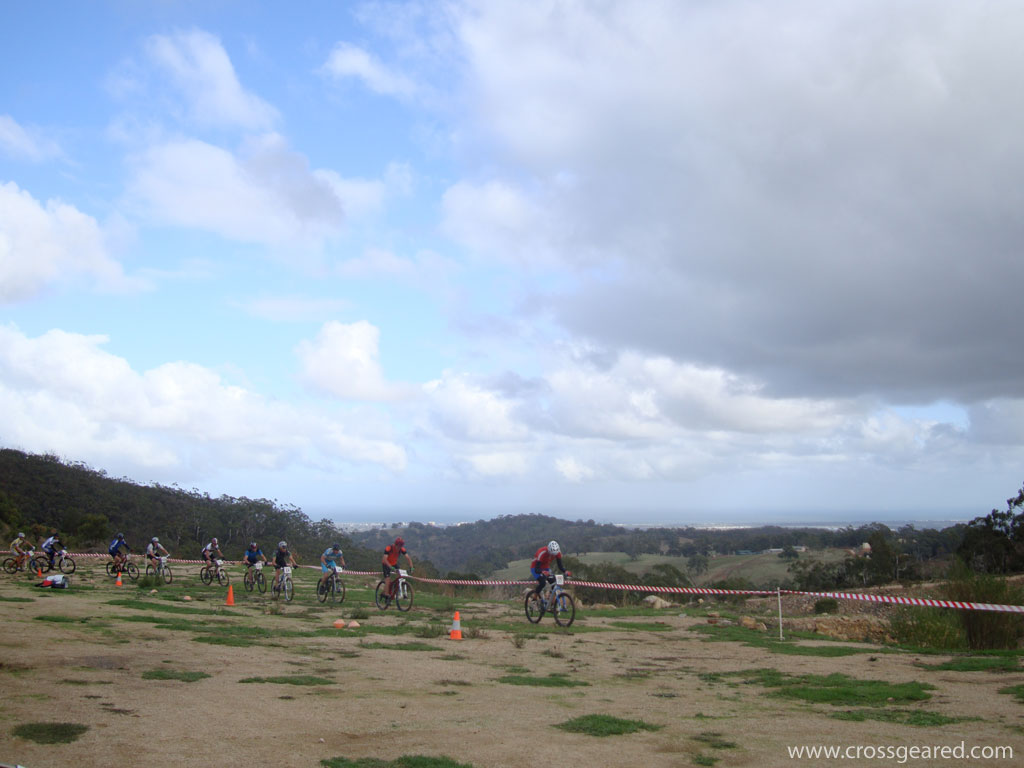
Here you will see a view of turn 1 as seen from the start/finish line. I’m the fifth one back, wearing in blue.
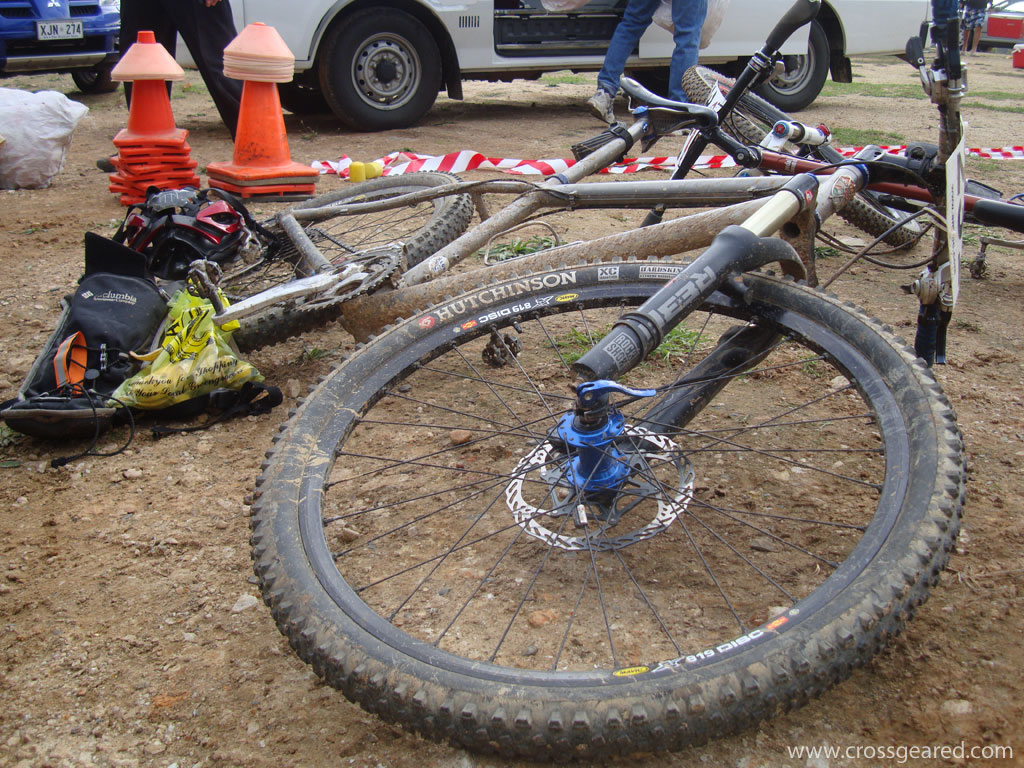
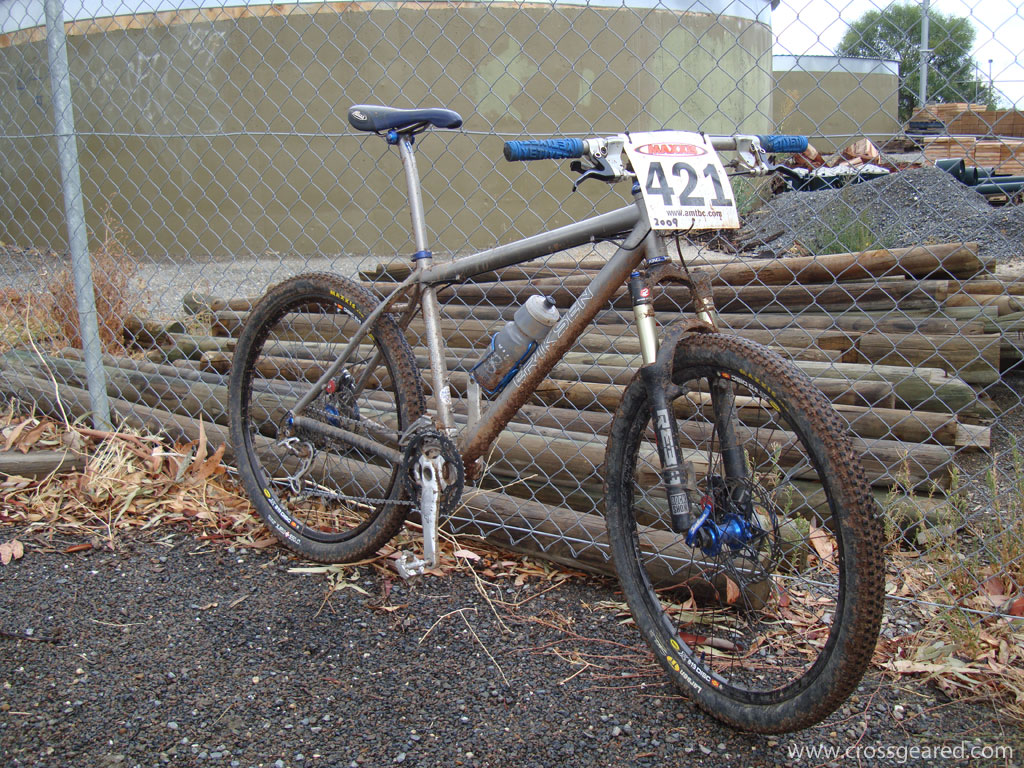
The Eriksen and a bag of banana peels after the finish. I swapped my usual Larsen TT/Crossmark tires for my more mud-friendly Hutchinson Toros. The Toros were nice on the first lap, but the Larsen TT/Crossmark combo would have been better for the rest of the day.  That said, the Toros are doing a much better job of holding air than the Maxxis tires ever have.  I mounted the Hutchinson tires tubeless with Stan’s sealant, and a week later they had not lost much (if any) air pressure.

I also took the granny ring off, mostly because I’ve been having chain-suck in the middle ring (and the extra clearance is helpful), but also because removing the ring had the secondary benefit of not letting me use it.  I had not used the granny ring at Eagle in quite a while, and I didn’t miss it during the race.  I’m now contemplating switching the Eriksen to 1×9…
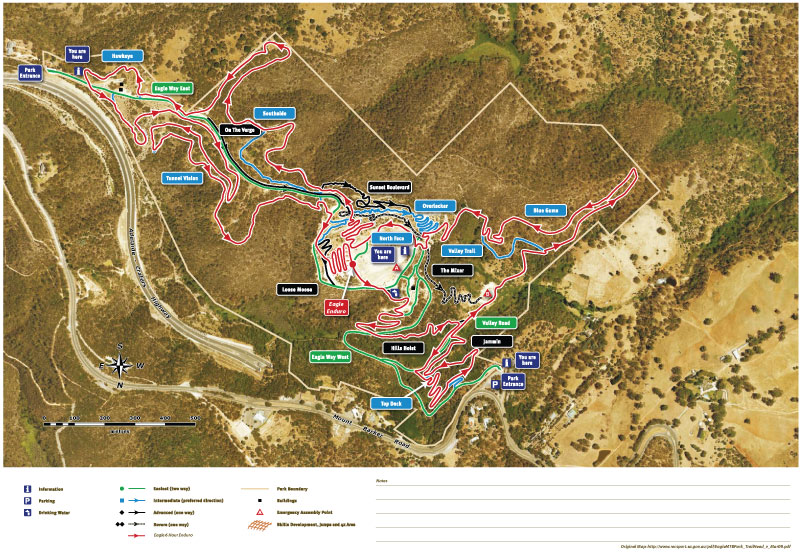
Here is a map I made of the course, just in case you’re inspired to try a lap of your own.  The red-on-white plus red-on-pink route is a full lap.  The red-on-pink alone is the under-17 and recreation class lap. Download a printable PDF of the Eagle 6 Hour Enduro Map.
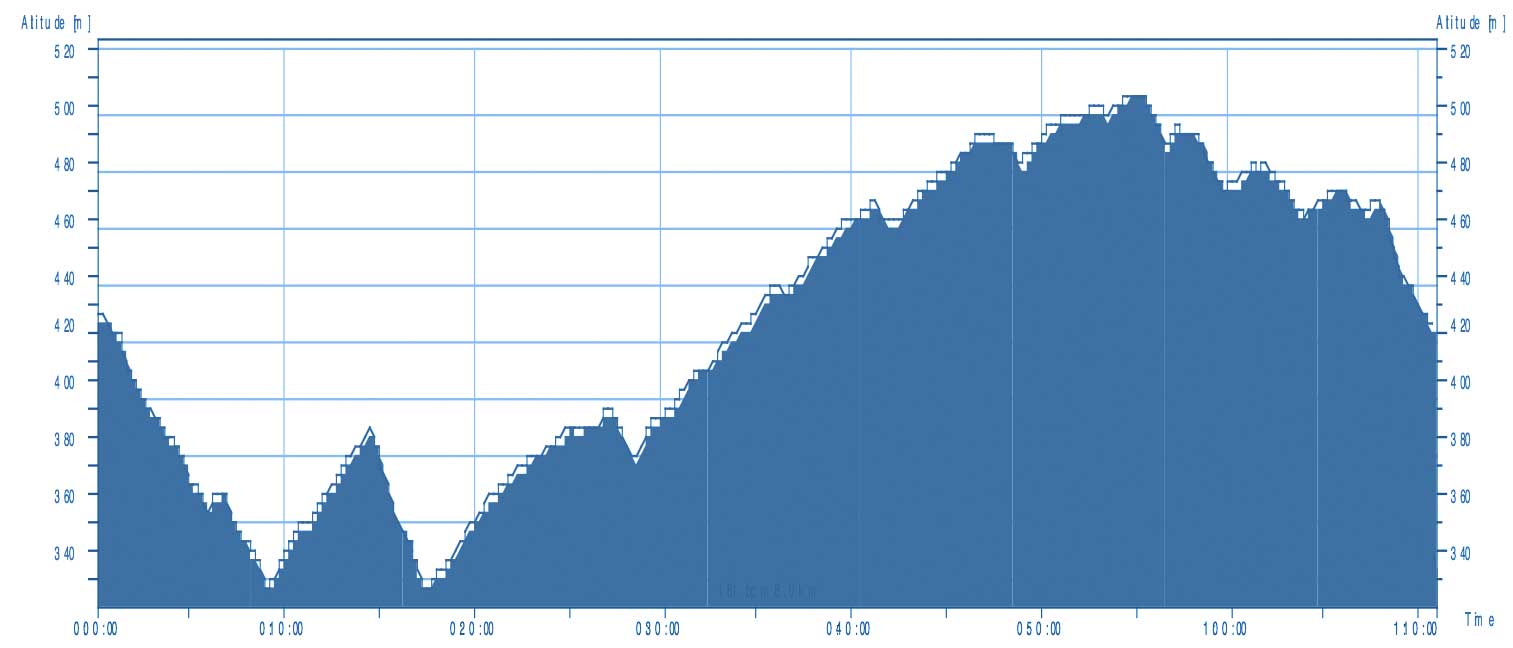
Finally, here is an elevation map of the course.  This was provided by another competitor, so ignore the time.

Video: AMTBC Flinders XC 2 MTB Race

10 March 2010

The last race of the 2009/2010 AMTBC Summer Series was yesterday.  The race was held at Flinders University on some of the trails near car park no. 3.

This was the first time I had ridden on these trails at Flinders as they are normally closed to bicycles.  The course was a mix of singletrack and fire road with some moderately technical sections and a fair amount of elevation change.  The weather was cool at around 20°C with light rain starting about half way through the race.

As in the previous two races, I was in the C grade.  The C grade raced four laps of the roughly 4.5km course.  This time I decided not to lead from the start, and let someone else set the pace.  This worked out for the first couple of laps where I held a close third or fourth place.  But, by the third lap my fourth place was significantly behind third.  In the end, I finished in fourth with a time of 1:03:08, 30 seconds behind third place, and with fifth and sixth place not far behind.

A brief update on the BB7 brake upgrade:  The BB7s worked very well in the wet and muddy conditions.  My feel for the brakes has improved significantly in the almost three months that I’ve been using them.  I initially had some concerns about rear wheel brake modulation, but the modulation seems on par with the Motolites now that the brakes are fully bedded-in and I’m more used to them.  Also worth noting is that after the initial setup, the brakes haven’t needed any adjustment.  Overall, I am very happy with these brakes.

My official results; hours:minutes:seconds:

Lap 1Lap 2Lap 3Lap 4Lap AvgTotal Time
14:2915:5116:3016:1015:471:03:08

For comparison, grade average lap times; minutes:seconds (number of laps completed):

A Avg. LapB Avg. LapC Avg. LapD Avg. LapE Avg. LapOverall Avg. Lap
13:34 (6)14:43 (5)15:52 (4)17:42 (3)20:49 (2)16:58

Do you want more data?  Well, I noticed that a large number of people in my race grade were named David.  In fact, 7.8% of people racing at Flinders were named David.  Furthermore, 66% of those named David finished adjacent to another David.  Overall, those named David had a lap average time of 16:29, which is 29 seconds faster than the field average.

Helmet-cam video of my first lap:

Dead AirPort Express

06 March 2010

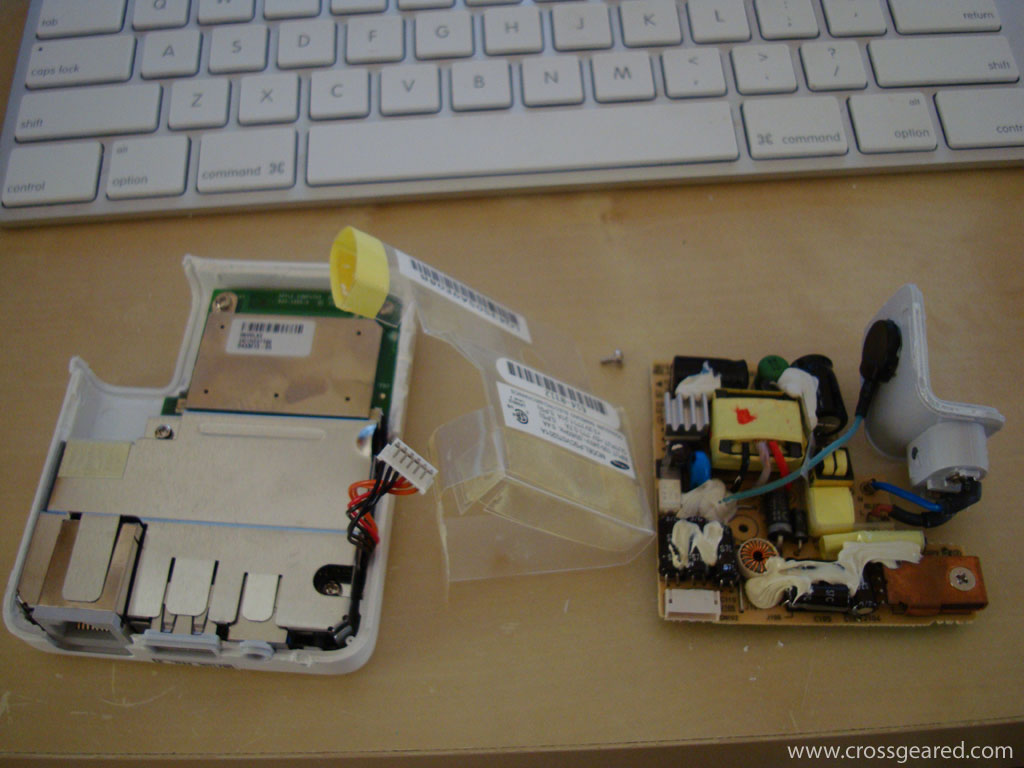
My second AirPort Express died.  But, a quick search suggested that the problem might be as simple as a dead power supply.  This sounds simple, but like most Apple products, the AirPort Express is not easy to open.  After a long struggle, the AirPort was open and it was clear that the power supply was dead.

According to this site, the AirPort Express requires +5 VDC and +3.3 VDC.  Not surprisingly, a standard ATX power supply provides 3.3, 5 and 12 VDC.  If you think you may have already read something like this, you have.

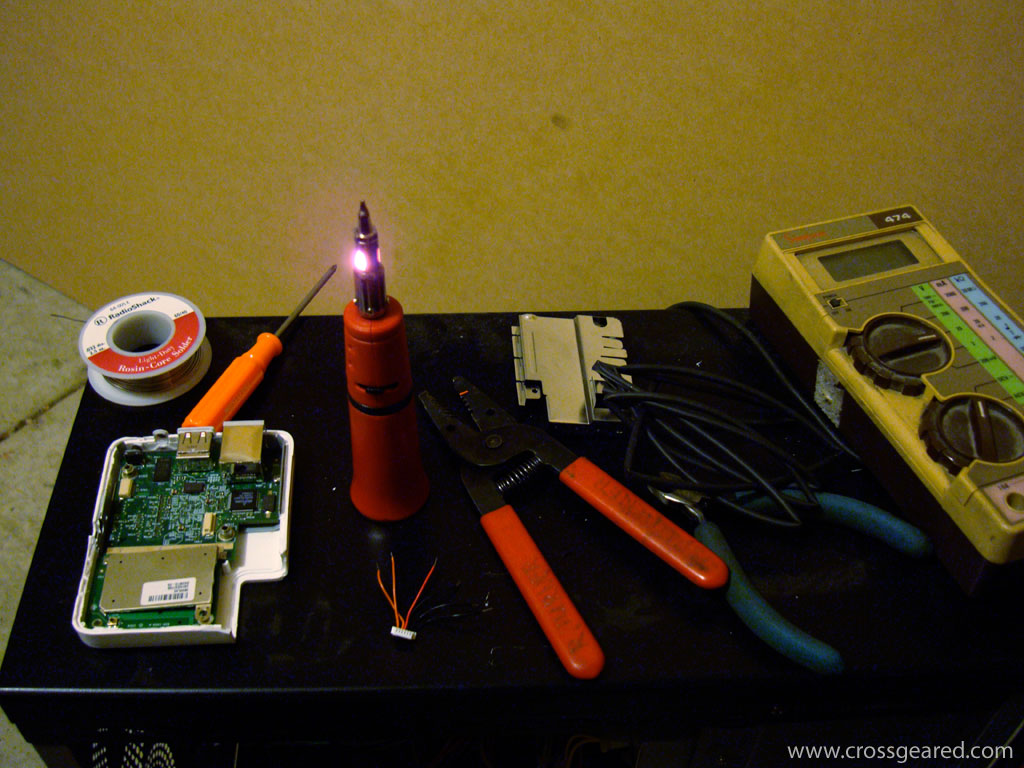
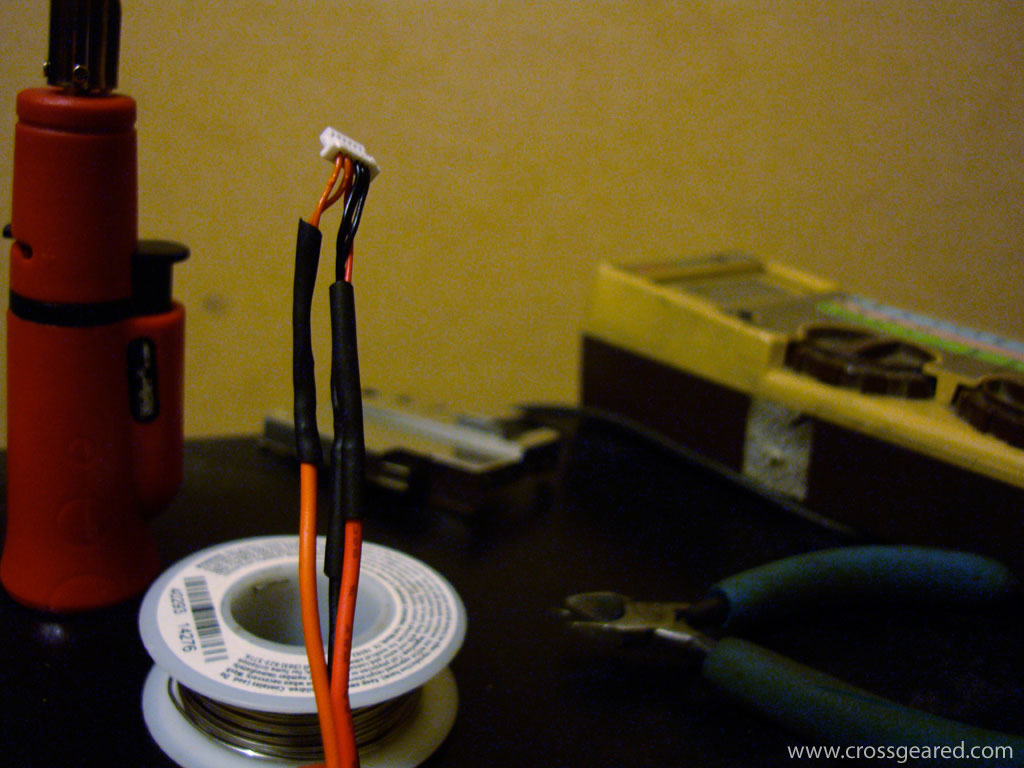
This time I didn’t use the power supply from the PIII I pulled from the garbage, but the power supply in the P4 ‘Trash Server‘ (that I pulled from the garbage).  The original reason I wanted to use this AirPort Express was that the wifi card in Trash Server hasn’t been very reliable, and there is no easy way to run a cable to the server.  So, Trash Server had a conveniently unused power cable with +5VDC, +3.3VDC and ground.   In less time than it took to open the AirPort Express, I spliced the power cable from the old power supply into Trash Server’s power supply, added a zip tie, and had a working network again.

Trash Server in its element.  I chose to attach the AirPort Express to the outside of the server to increase wifi range.  But, you’d have to agree that it does look nice.  Right?  Anyway, an external antenna could be easily added to the AirPort Express; I just don’t happen to have any extras around.  One AirPort Express easily covers our entire house, so I don’t think I’ll be adding any antennas anytime soon.

If you have a dead AirPort Express and don’t happen to have your own Trash Server, you can power a dead AirPort Express from many sources including USB, or a spare power brick.  See 2 Ways to “Fix” an Airport Express for more details.

Creative Commons License
www.crossgeared.com is licensed under a Creative Commons Attribution-Noncommercial-Share Alike 3.0 Unported License