crossgeared.com

Cycling

Forks

Monday, March 19th, 2012
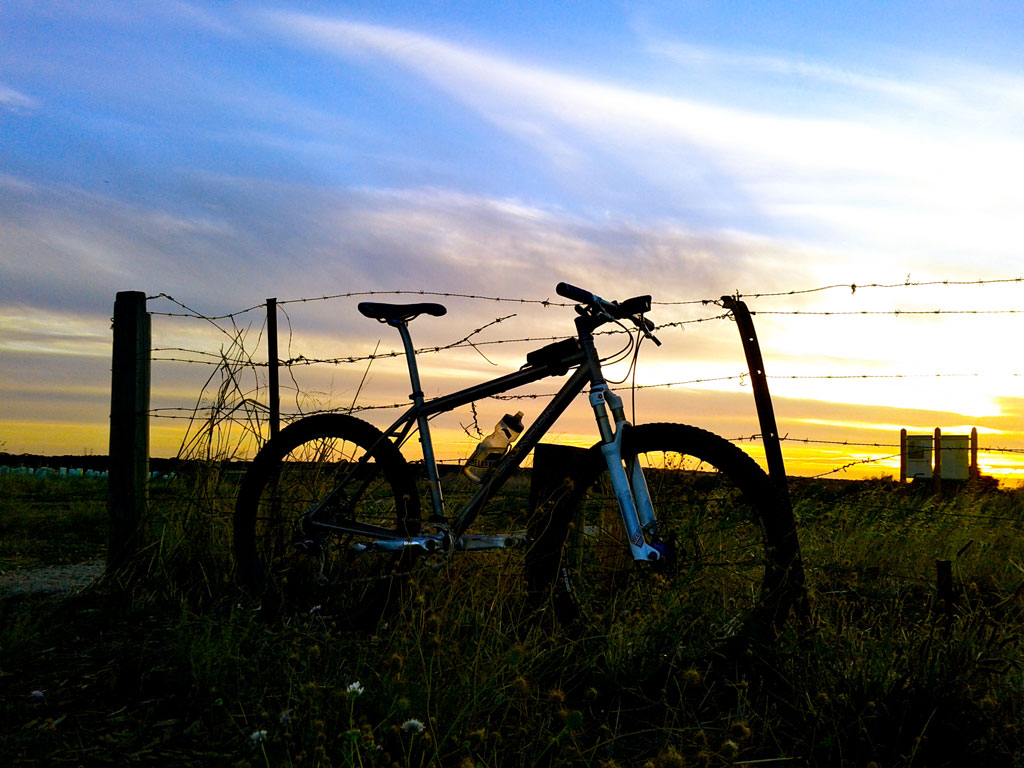
The “old” ’08 Reba Race on the Eriksen has seen better days.  I’ve rebuilt it a few times, but it had been leaky and a bit disappointing for a while.  The Poploc, which never really worked, started seeping oil a while ago, and had started blowing oil out of the adjuster on rides.  While a little messy, this wasn’t a huge issue until I started riding the rigid 29er more– it just made the “flexyness” and other issue more noticeable and annoying.  In the end, the Reba lasted through four years of riding (down to the month), with more than three and half of those years being pretty good.
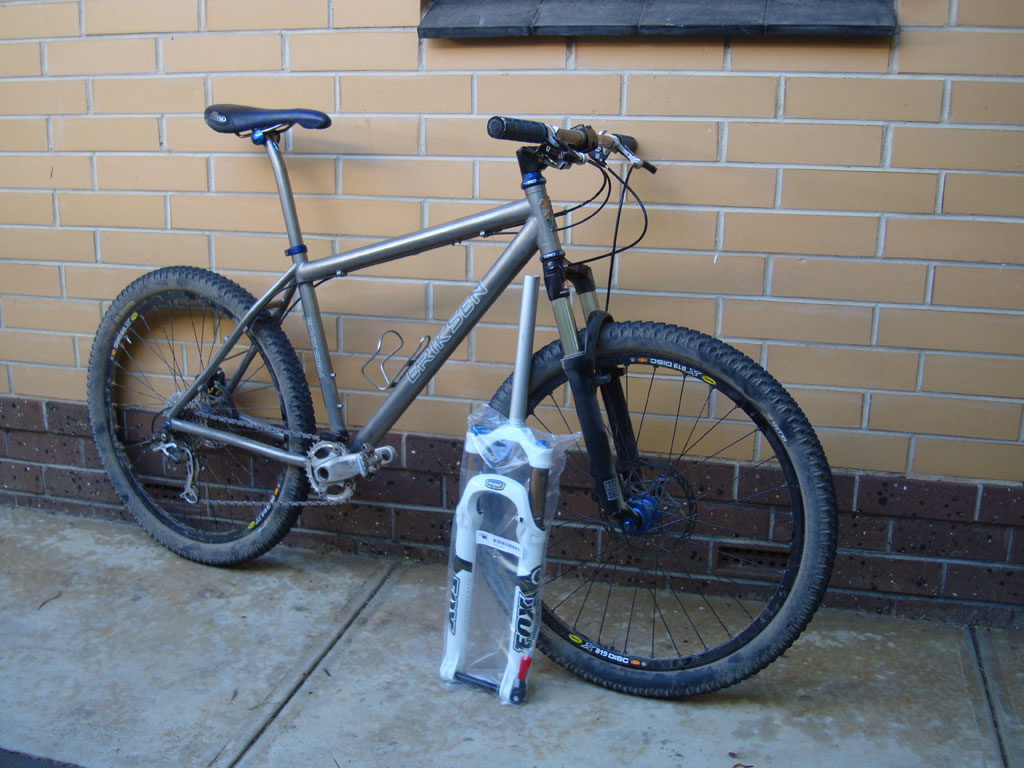
Fork number 1: I looked around and thought I found a good deal on a Fox F100 RLC FIT QR15.  Although I hadn’t ridden Fox forks much, I had heard mostly good things about them.  On top of that, the QR15 seemed to be a good option to stiffen up the front end.  However, it wasn’t to be.  I had a pricing disagreement with a surprisingly rude Fox distributor, so I gave it back.  Not wanting to deal with Fox anymore, I looked elsewhere.
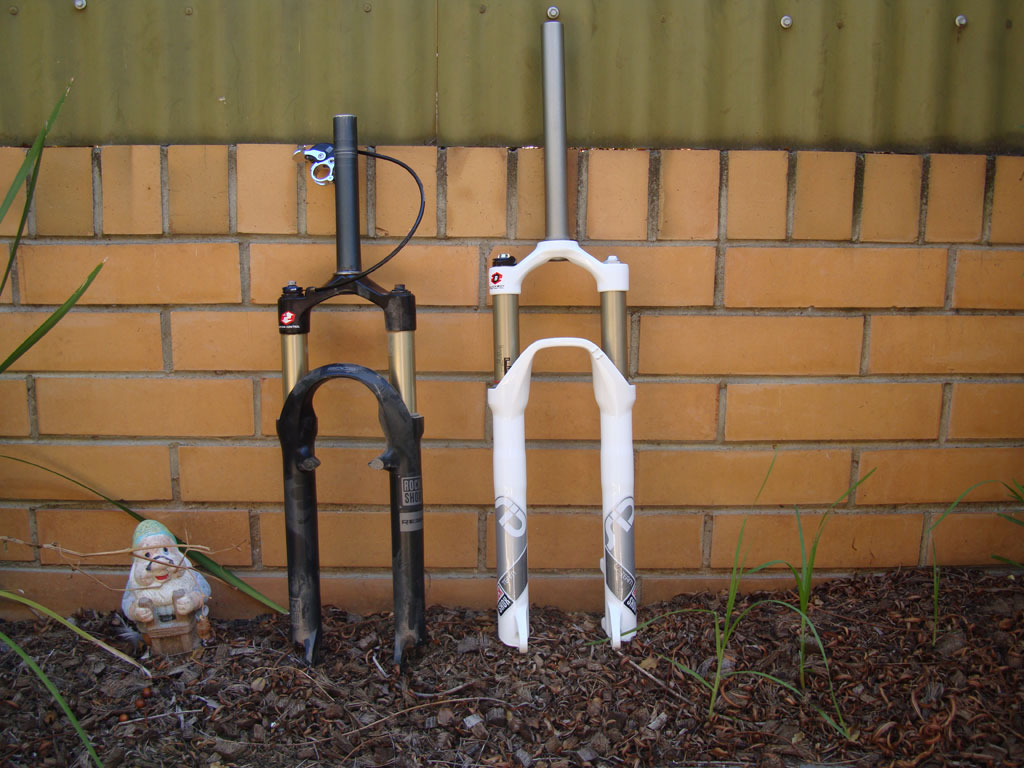
Fork number 2: Thanks to the friendly staff at Upfront Bikes, the same day I returned the Fox, I went back to Rock Shox and got a SID Team at a very good price.  It’s lighter than the Fox, stiffer than the Reba, and a huge improvement over the last two 28mm SID forks I’ve had.  On the down side, it isn’t QR15, Maxle or anything of the thru-axle variety.  It’s plain-old QR, but it still feels fairly stiff.  Apparently, the Reba was a little saggy as well.  The angle makes it look worse than it was, but the Reba was sagging 15-20mm with no load and proper inflation.
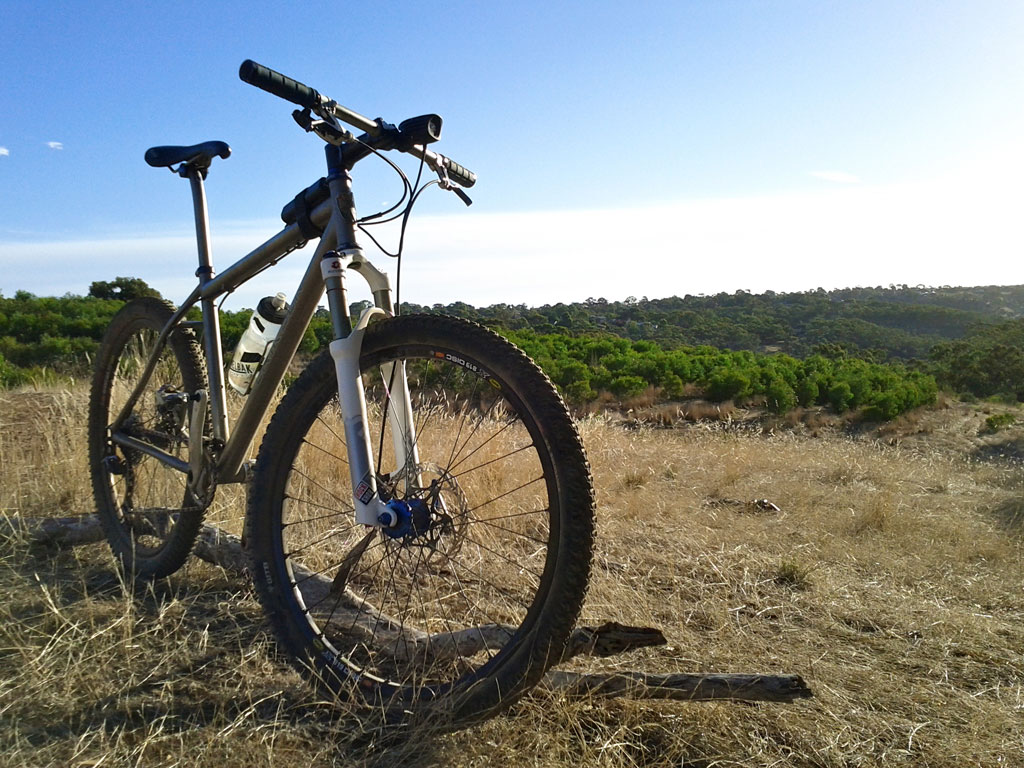
I took the Eriksen and new fork out for a night ride from Flinders Uni through Sturt Gorge,  into Craigburn, back through Sturt and Flinders and back to Glenelg.  I was surprised that the SID actually felt stiffer that the Reba, so it was off to a good start.  The ride was great, and aside from some air pressure adjustments, I’m happy.  The SID cut about 250g off of the weight of the fornt end, but I’ll be putting most of that back on shortly with my winter tyre swap.
Cyclo Sportif

Tuesday, March 13th, 2012

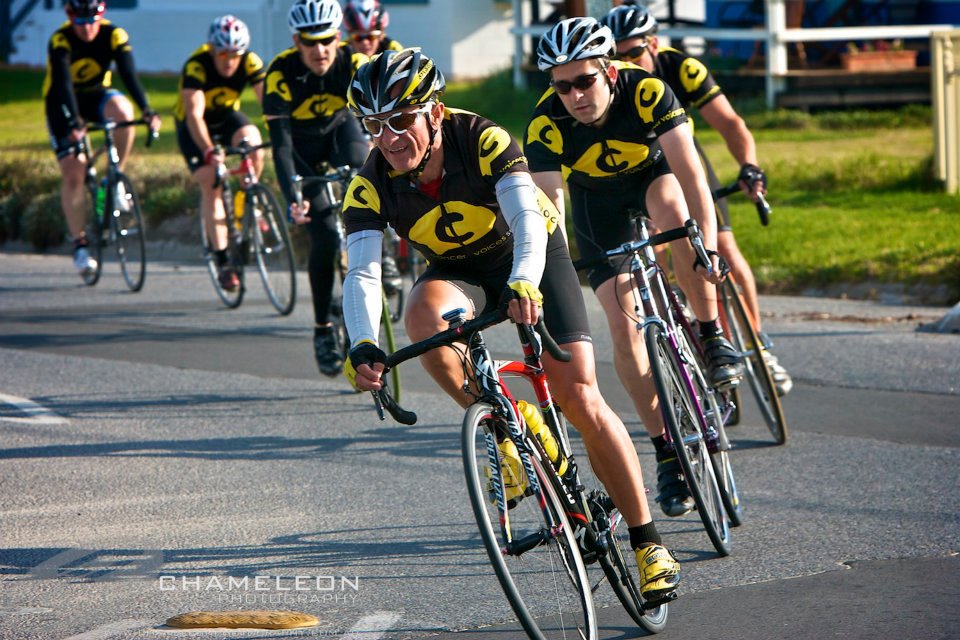
Photo Credit: Chameleon Photography

This past weekend I raced with the Cancer Voices SA ‘Yellow’ Team in the CSA Cyclo Sportif round 5 at Snapper Point.

This is what happens when you are a mountain biker and get a cyclocross bike.  It’s a slippery slope.  First come cyclocross races, then maybe a road bike, and before you know it, your racing on the road with a team in matching jerseys.   All that said, it’s a lot of fun and I’m looking forward to the next race.

The Australian Bicycle Market

Tuesday, February 21st, 2012

So, as you may or may not know, I’m fulfilling one of my childhood dreams.  In addition to the software development, IT and plumbing, I’ve been working as a part-time bicycle mechanic for the past six months or so.  It’s good work, if you can find it.

Anyway, I’ve been following the Australian bicycle industry since I’ve moved here, and recently read two very good articles on the local and global bicycle industry.  Here’s your summer reading list.

  • First, Cycling IQ has a great series on vertical integration in the bicycle industry using the Australian market as an example in ‘Vertical Limit‘.
  • Second, INRNG has a short piece, ‘Who made your bike?‘, which should be pretty self explanatory.

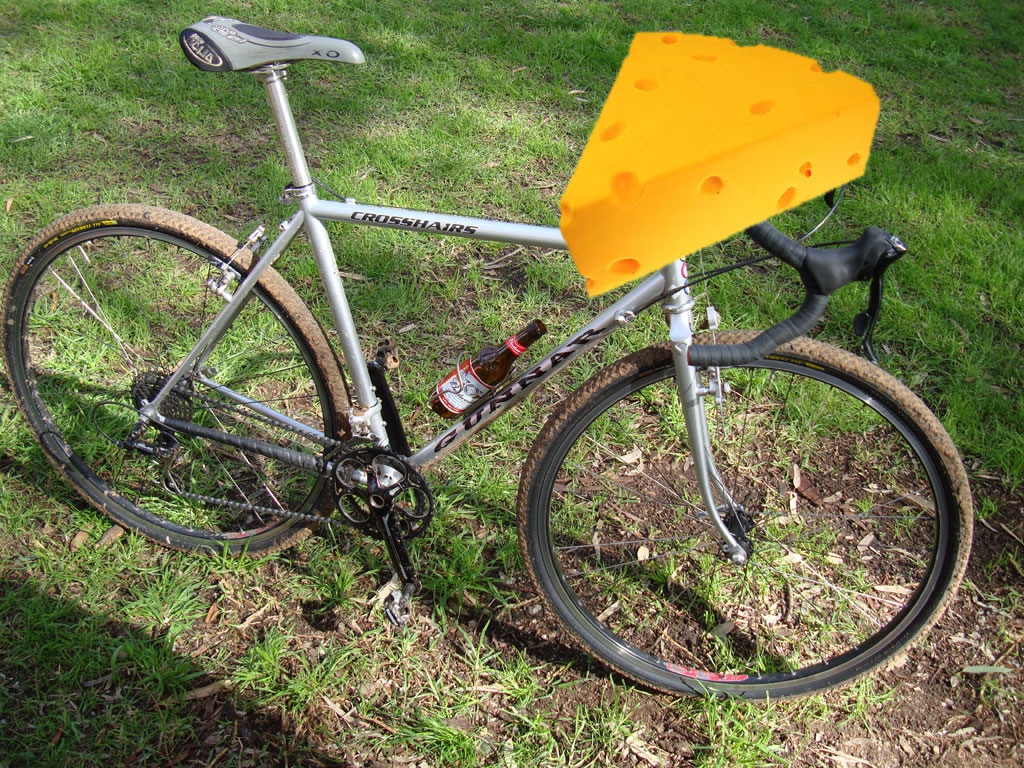
A recent personal experience with some of the practices outlined in the Cycling IQ article concern the origin of those shiny silver 105 lervers that found their way onto the purple plastic Trek (which was made in Wisconsin by someone wearing a cheese hat, and since it was 1994, likely a mullet).  The levers were ordered from the UK, but not from the huge online shop you’d expect.  The obviously-new levers arrived in unmarked plastic bags along with similar bags containing the cables, housings and other small parts, and all for significantly less than the wholesale Australian cost for the same levers in a retail box.

Where did these come from?  Read the Cycling IQ article and decide for yourself.  I’m not going to make a judgement on these practices– there are clear winners and losers on both/all sides any way you look at it.

Finally, who made my bikes?  Well, as I already mentioned, the Trek was made in Wisconsin, as was the Gunnar.  The Eriksen was made in Colorado, and the Kona was probably made by someone in the INRNG article.

What does this mean?  Not much.  While there is a certain amount of pride riding a bike made in your own country, all it really means is that the Trek and Gunnar would probably sound funny if they spoke.


Creative Commons License
www.crossgeared.com is licensed under a Creative Commons Attribution-Noncommercial-Share Alike 3.0 Unported License
